Written by ASAP’s expert immigration lawyers · Updated
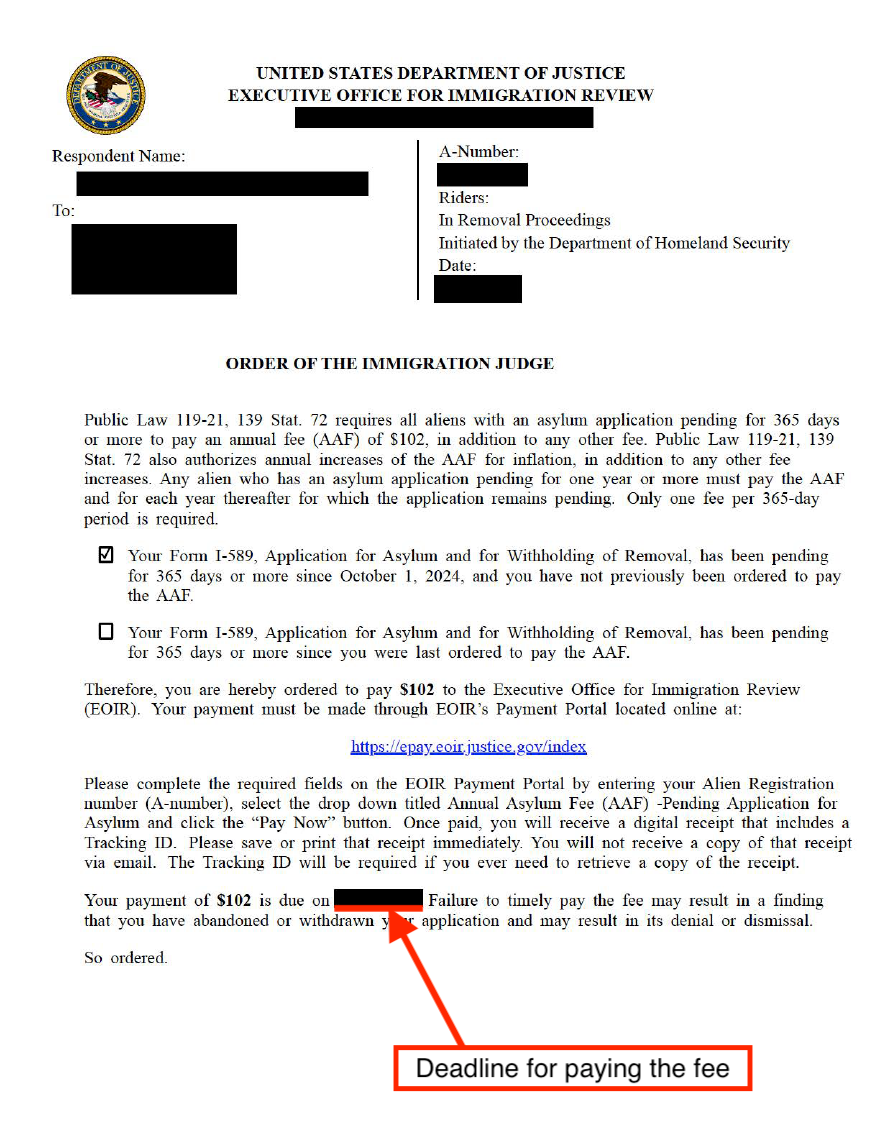
This order from an immigration court says that you need to pay the annual asylum fee and includes a deadline to pay the fee. You can pay the fee on this payment website.
The annual asylum fee increased from $102 to $105 on October 1, 2026. Review the fee amount in your order carefully, so that you can pick the correct option in the drop down menu for “Filing Type” on the payment website.
If your order says “$102”: select “Court - Form I-589, Annual Asylum Fee for Asylum and for Withholding of Removal (AAF) - For Fiscal Year 2026 Payments” to pay $102. Your order likely says this if it is dated before October 1, 2026.
If your order says “$105”: select the option that says “Court - Form I-589, Annual Asylum Fee for Asylum and for Withholding of Removal (AAF)” to pay $105. Your order likely says this if it is dated on or after October 1, 2026.
Find more instructions, including how to send proof of payment to immigration court.
September 22 Update: Thanks to ASAP members' lawsuit, a judge has ruled that the way that the immigration courts have been charging the annual asylum fee is illegal. We do not know yet what will change as a result of this ruling. We will update this page as we learn more. If you applied for asylum more than 1 year ago, you can still pay the annual asylum fee by following these instructions.
You can find the most up-to-date information about the annual asylum fee in immigration court here. You can also watch this video about how to pay the annual asylum fee in immigration court.
The Asylum Seeker Advocacy Project (ASAP) aims to provide factual information about current immigration laws. This information is not legal advice.
All legal content is written and legally reviewed by ASAP’s team of expert immigration lawyers. ASAP’s expert lawyers have decades of experience in immigration law and litigation. Collectively, they have won hundreds of cases. Our lawyers are admitted to the Bar in several U.S. states, hold law degrees from universities including Harvard, Yale, and UCLA, and have won multiple awards for their legal work.